The Micro-Mobility Void: Fixing a Bicycle and Optimizing Urban Transport
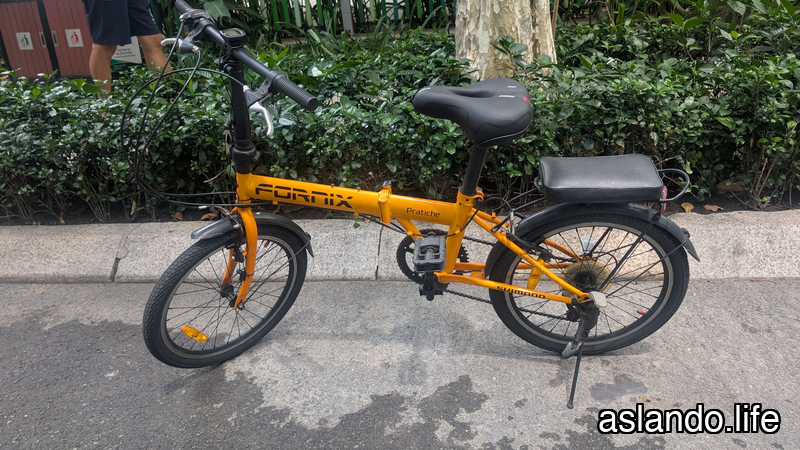
This weekend, I spent time in the garage repairing an old bicycle so my daughter could practice riding, while also prepping it for my own weekend routines—running local errands and getting some cardio in.
A while back, after transitioning to a hybrid work model where my office commutes are handled entirely via metro or bus, my family made a radical decision: we sold all our gasoline motorbikes. For long-distance trips, we rely on our car. For daily urban transit, we utilize public transport or ride-hailing services.
It felt like a clean, optimized system. Until we hit a logistical edge case: the micro-mobility void.
When you eliminate the motorbike from a city like Saigon or Hanoi, you immediately notice the friction of the "last mile." For quick, short-range trips—like dropping by a local market a few blocks away—waiting for a ride-hailing car is highly inefficient, and walking takes just a bit too much time under the sun.
The bicycle is the missing variable that balances the equation.
By restoring this simple piece of hardware, we solved a major inconvenience in our transport pipeline. It provides a zero-emission, highly flexible tool for short-radius transit without the overhead of maintaining a motorbike.
Every system optimization inevitably creates new edge cases. The key isn't to roll back to the old, inefficient infrastructure—it's to find the simplest, lowest-friction tool to patch the gap. Sometimes, that tool is just a well-oiled pair of wheels.