The Spotify Model Illusion: Deconstructing the Myth
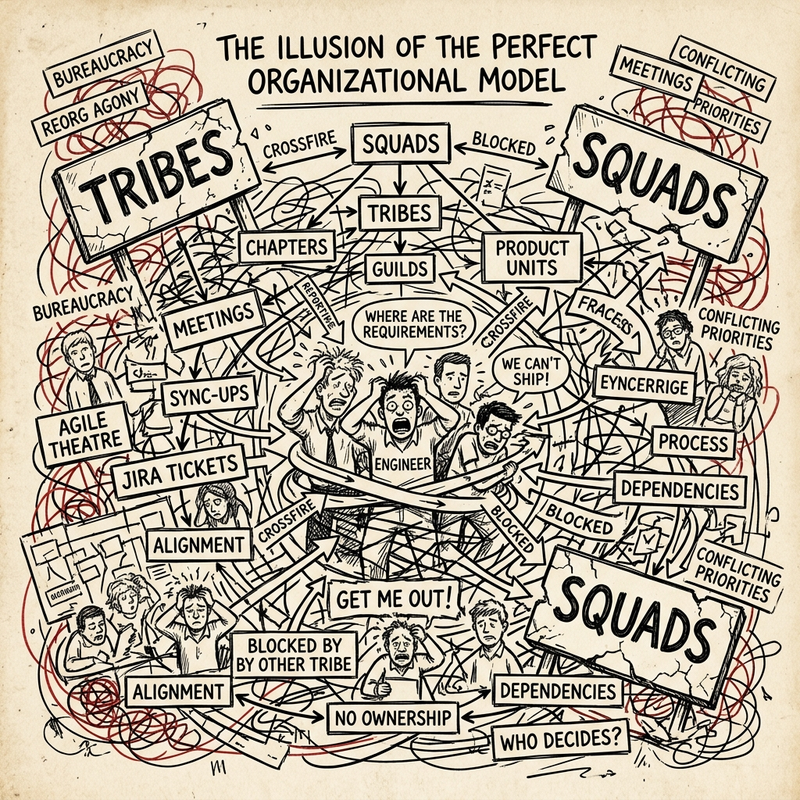
Many organizations attempt to replicate Spotify's success by copy-pasting its organizational blueprint, only to find themselves trapped in coordination hell.
At its core, the Spotify Model is designed to balance team autonomy with cross-functional alignment. It organizes engineers into autonomous, multi-disciplinary Squads grouped into business-focused Tribes, while linking specialists horizontally through Chapters and Guilds.
It sounds perfect on paper. But when companies copy the structure without the underlying culture of trust and high engineering discipline, it inevitably breaks down in three predictable ways:
- Political Role Conflicts: Without clear boundaries, Squad Product Owners and Chapter Leads constantly clash. One pushes for immediate business delivery, while the other demands technical excellence, leaving engineers caught in a crossfire of conflicting priorities.
- Pull Request Bottlenecks: Highly autonomous squads need to ship fast, but they often lack end-to-end code ownership. When they submit code changes to repositories owned by other teams, it results in ignored Pull Requests, stalled review cycles, and blocked pipelines.
- A Brutal Coordination Tax: When trust is missing, alignment requires endless bureaucracy. Squads spend more time in synchronization meetings, cross-team planning sessions, and status updates than actually writing code.
Autonomy is not about giving teams cool names. If you adopt the structure without fixing code ownership and establishing clear operational boundaries, you aren't building a modern tech organization—you are just rebranding your legacy silos.